




HISTORY OF THE VILLAGE OF MARSA
Extracts from the book "Opération Vilatges al Païs Cinem' Aude 2000 Fédération Leo Lagrange Communauté des Commmunes du Canton d'AXAT (F. POUDOU, F BEDOS, M RAINAUD)

Coat of arms of the town: Vert with three billets lying of money rows in fess.
MARSA, Township of Quillan; parish church dedicated to Saint: Wolf. the Abbe de Joucou first, then the chapter of Saint-Paul Fenouilledes Pyrenees Orientales).) Presented at the cure; Seneschal of Limoux
Here is the information provided by the notice on the back of the double map of - Palau (published at the beginning of the century).
Local History
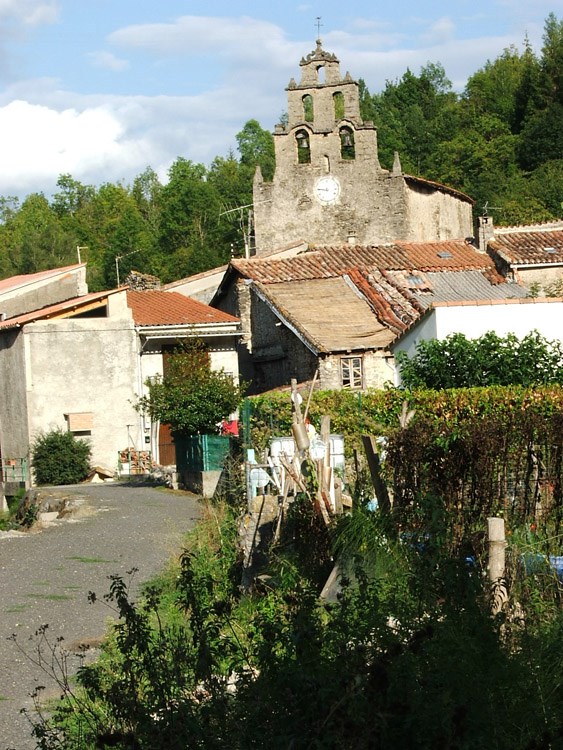
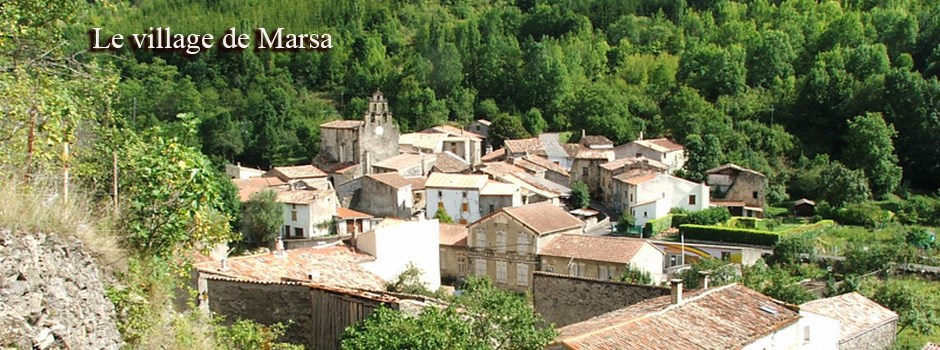
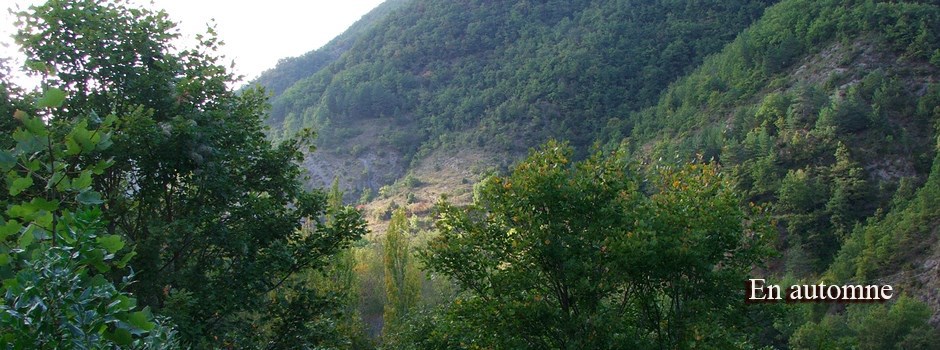
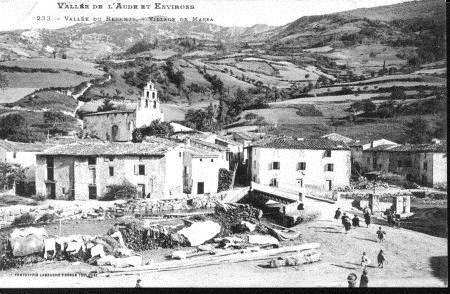
The pretty village of Marsa is located in the beautiful Valley of Rébenty, in the middle of a pleasant valley covered with green meadows and beautiful orchards, and surrounded by beautiful forests of oaks and firs.
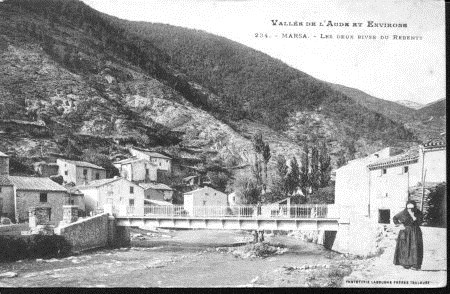
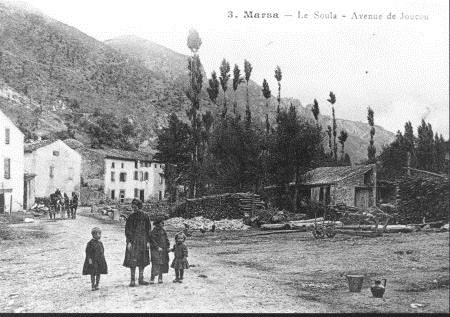
The Rebenty River separates the village into two parts connected by an iron bridge type Eiffel. The part on the left bank where the road passes is called "The Soula"; the other part on the right bank, where the church is, is called Le Bac. Marsa depended, in the 9th century, on the Joucou ablaye. He then formed, with Quirbajou and a village called Altozoul, the lordship of Castelpor whose castle (Castrum Portis) stood on the right bank of the Rebenty, between Marsa and Joucou at the top of a crest of rocks overlooking the river, near the hamlet of Taffine. We only find rare remains of this castle, which had to be destroyed by the Spaniards at the end of the 15th century. At the beginning of the 13th century, taken by Simon de Monfort's troops, Castelpor became a royal fortress. In September 1342, Bernard de Castelpor, damoiseau, and his brother, lent their assistance to the King of France to fight the English. In 1370, noble Pierre de Castelpor was established captain in Narbonne by Viscount Aymeri.
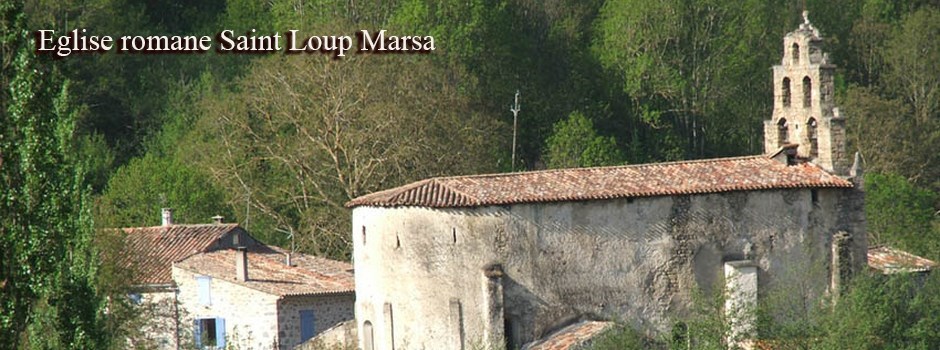
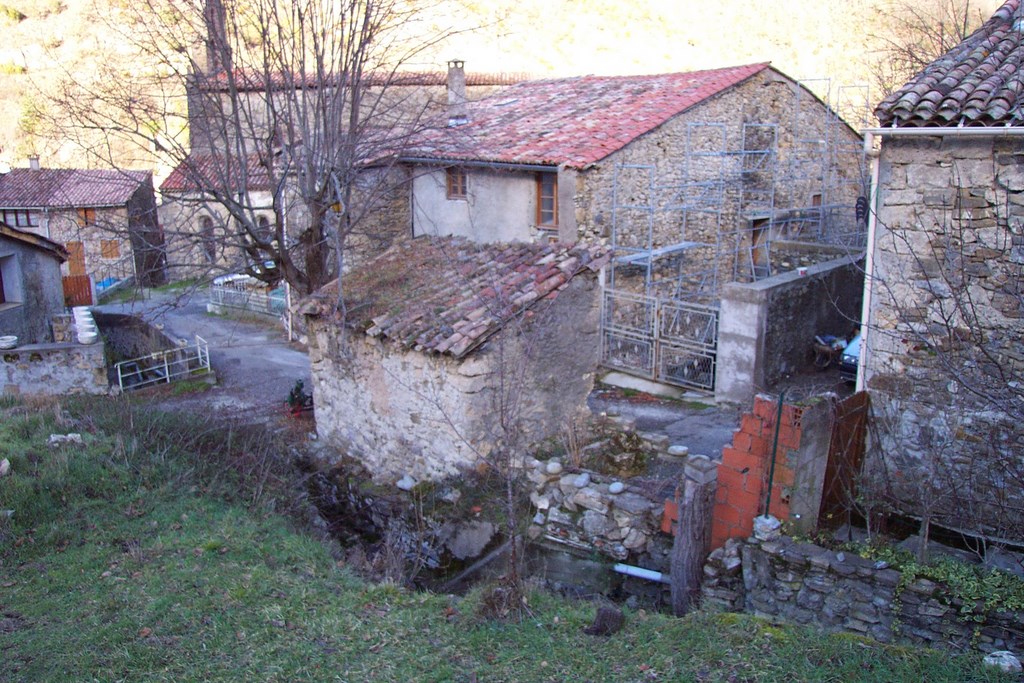
General views of the village of MARSA
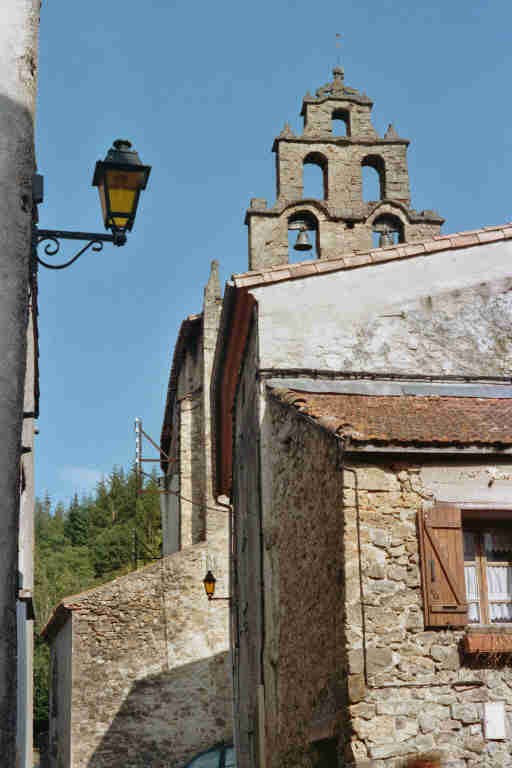
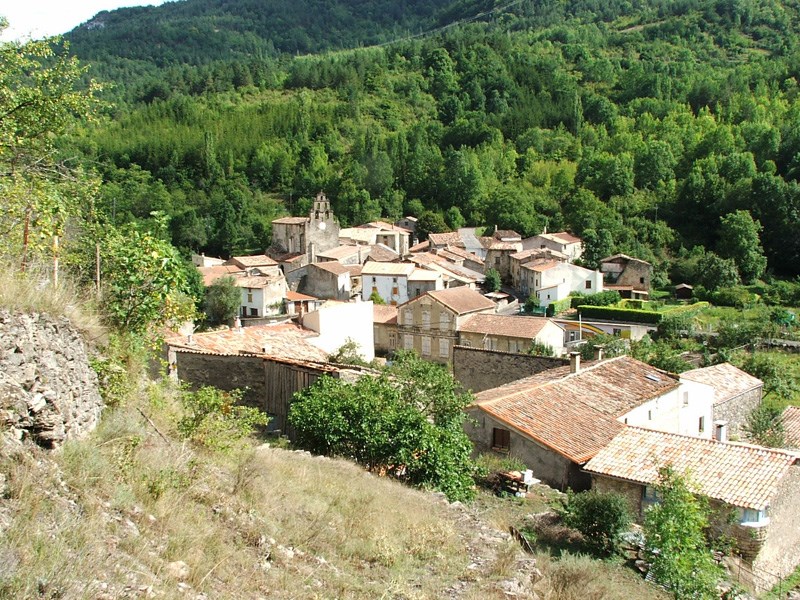
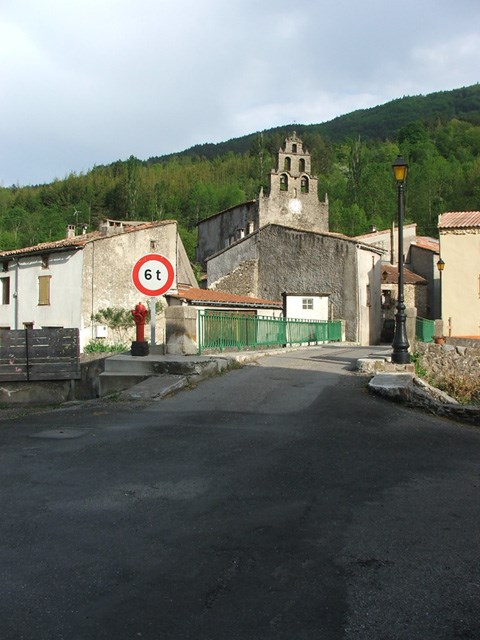
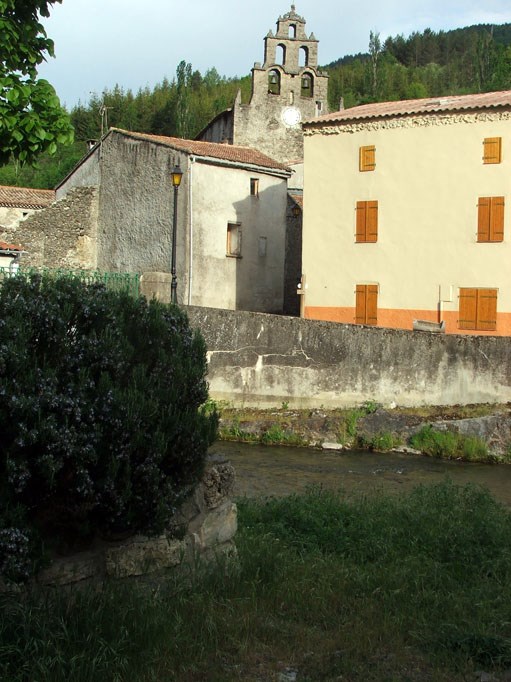
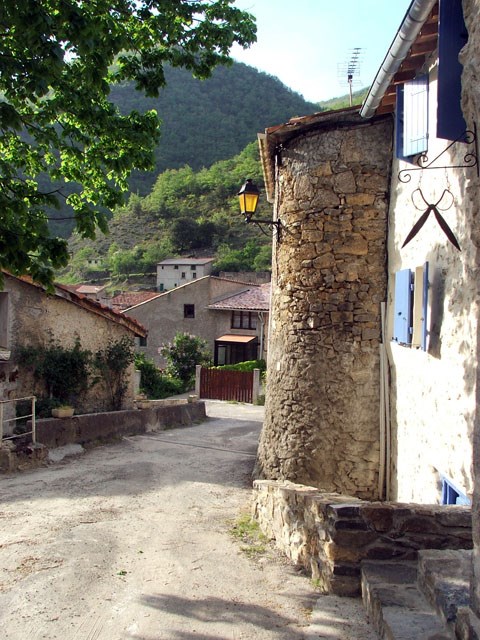
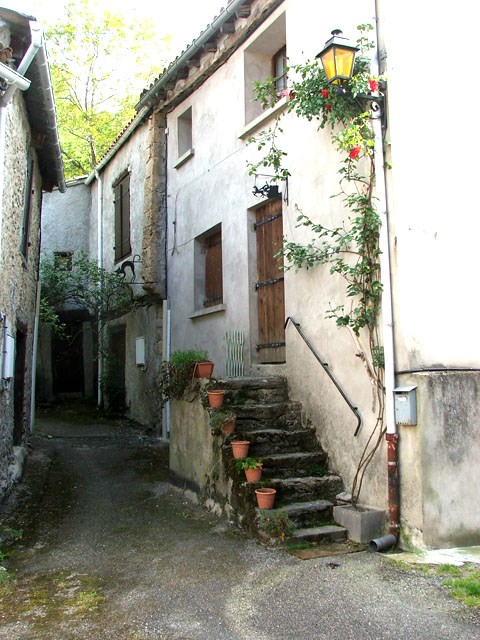
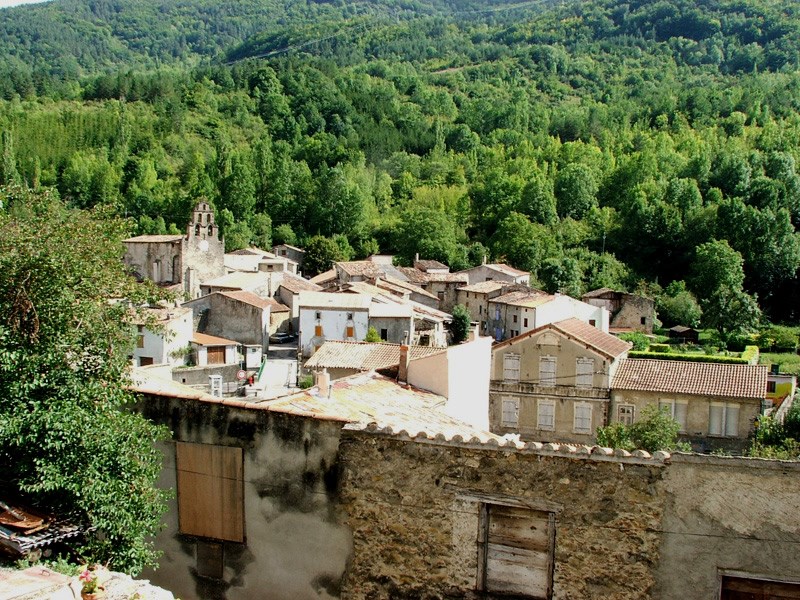
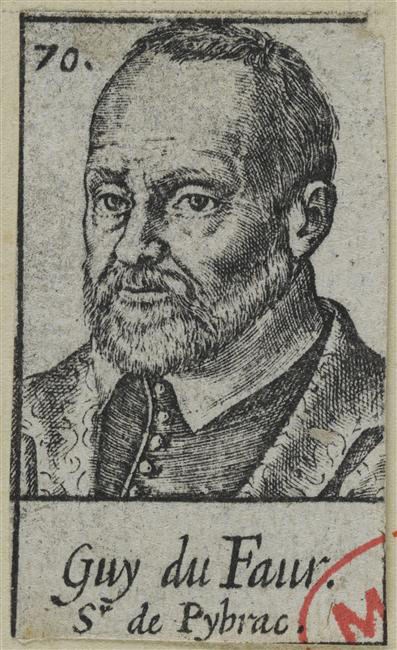
This lordship then passed in the house of Niort, then, in the 16th century in the house of Plaigne, and then in the house Dufaur de Pibrac. A member of this house, the famous Gui Dufaur de Pibrac, died in Paris in 1584, composing small pieces of poems that have been translated into all languages. He is the author of the famous Occitan song he dedicated to Marguerite, Queen of Navarre for whom he had a passion. Here is the chorus of this song (in Occitan):
Escoutats la cansounetto,
Fay to per bous !
Quote "I will teach you, if you want, in a few hours The beautiful secret of the drunken drink. Love yours, you will be loved by them, There is no better recipe. "Guy du Faur de Pibrac - Quatrains of the Lord of Pibrac
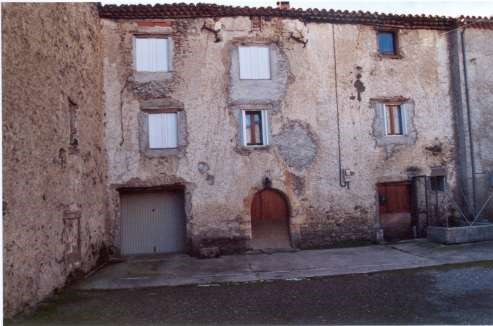
The former Maison Seigneuriale, transformed into rural dwellings, is at the entrance of the village, avenue de Joucou. Four turrets flanked the angles. Only the Northeast remains. We also see the old semicircular entrance door. The seigniorial dovecote, in the form of a tower, rises in front of the village, also on the Avenue de Joucou. There was an old village named Boulude, between Marsa and Clat. In the last century one could still distinguish the ruins of the old village and the walls of the church.
History of Marsa and Quirbajou d'après Jean Pouytes et Christian Raynaud


Castelpor and the Niort
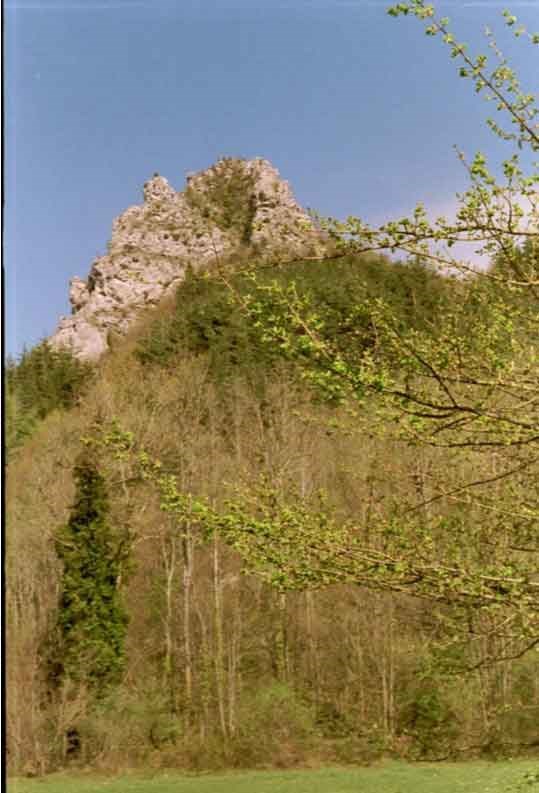
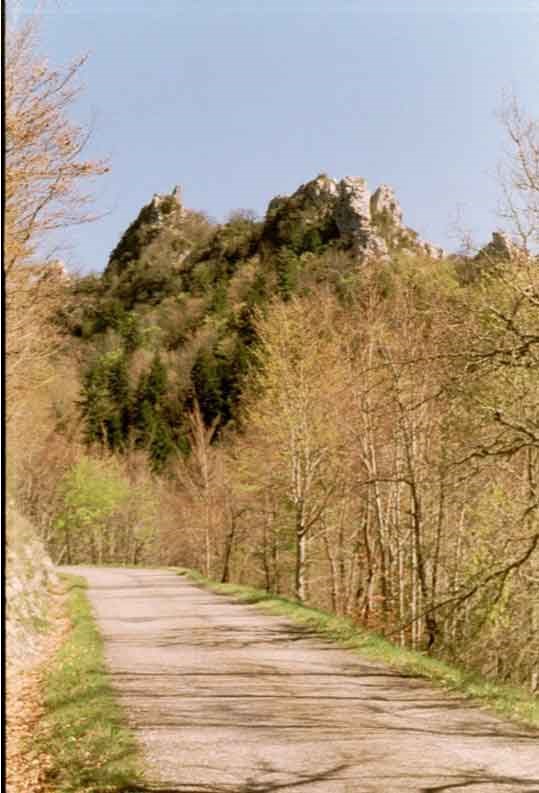
On the rocky spur overlooking the Rebenty on its right bank between Marsa and Joucou, there are some remains of an ancient castle called in ancient texts Castelpor.
There are only a few remains of the shirt and the possible traces of a square dungeon. [Able Castle in Joucou]
It appears for the first time in a degree of Charles the Simple of the year 907 in favor of the abbey of Joucou. Castelpor (Castrum Portis) seems to have the same origin as the neighboring castles of Able, Aniort, located on the path connecting the Fenouillèdes (hay country) to the Country of Sault (Country of the fir trees).
Throughout the Middle Ages, the destiny of Castelpor seems linked to the Niort family and, after the anti-Albigensian crusade, to his heirs who, finding the name of Aniort too heavy to wear, adopted the surname of "Castelpor" , less charged with heretical past.
In the eleventh century, the Pays de Sault belonged to the counts of Fenouillèdes. They paid tribute to Bernard de Besalu Castelpor Castle, its fortifications and its dependencies.
In 1152, the Pays de Sault was annexed to the Count of Razès. Bernard and Guillaume Aniort "recognized the right" to Raymond Trencavel new lord.
Ruins of the Castrum de Marsa
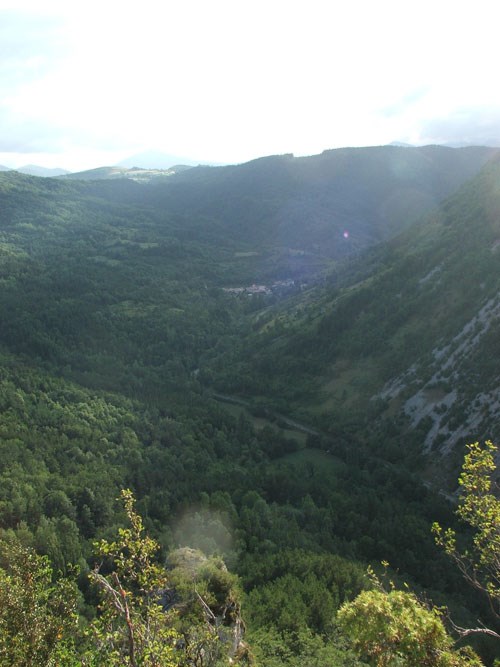
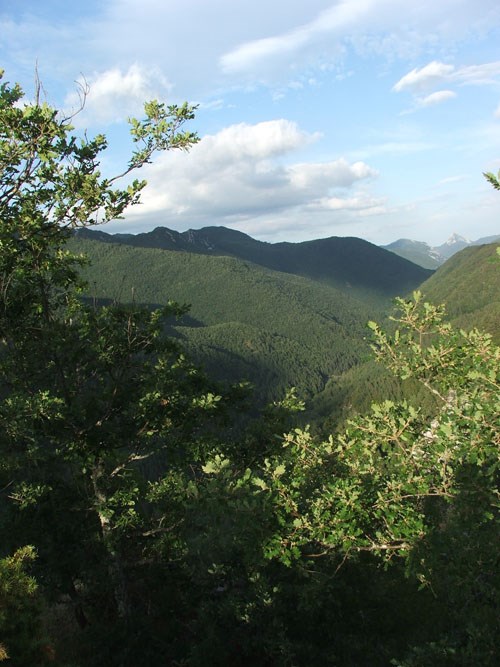
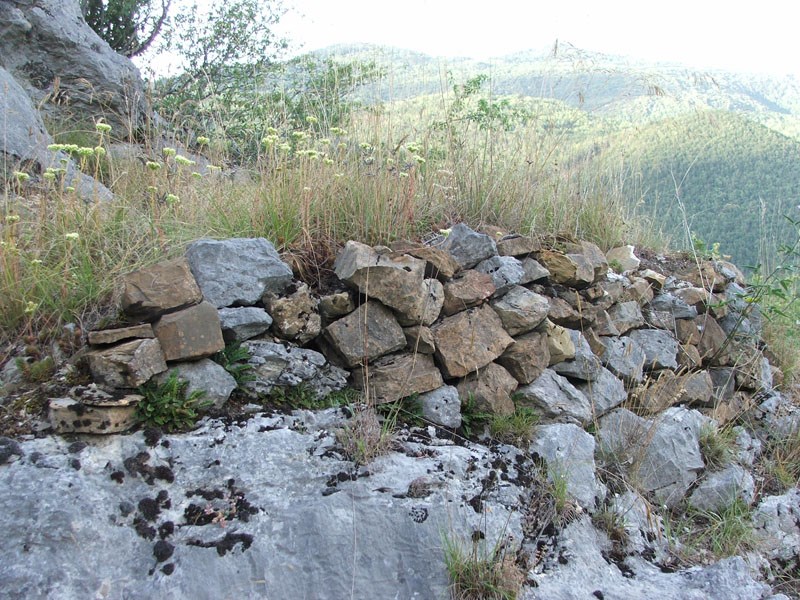
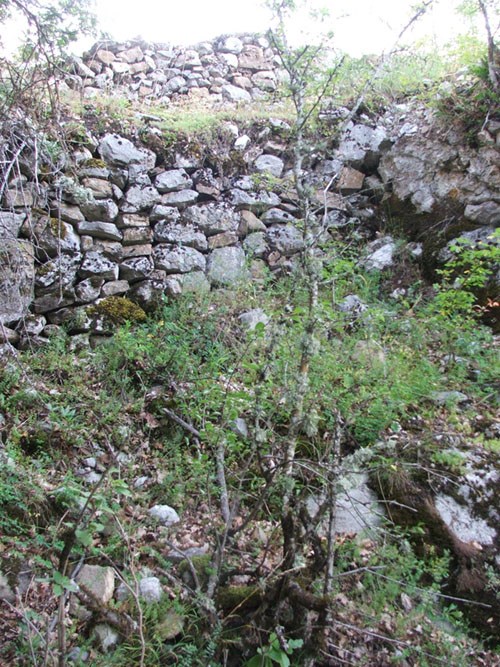


The remains of the castrum of Marsa are on the rocky spur overlooking the hamlet of Taffine. There are sections of wall delimiting the old houses, and at the highest point, a platform that was probably the base of a fortification.
From this castrum, one dominates all the valley of Rébenty on which one has a magnificent point of view. (photos against)
After the crusade against the Albigensians
After the crusade of the Albigensians, the family was stripped of all its property and Jeraud d'Aniort, acting on behalf of all his family, abandoned to the officers of the castle Castelpor Castle in 1240. In 1260, the castle was under the care of three sergeants or men-at-arms and a squire, Bernard de Erali, who received a treatment of five sous a day.
However, specifies Christian Raynaud it is necessary to wait for the end of the XIIIème century to have the proof of the existence, in Castelpor, of a small agglomeration contiguous to the fortress to form a "castrum". This locality was not going to live more than two centuries: during the last quarter of the fourteenth century, it succumbs in unknown circumstances and knows the same fate as the castle, dispossessed of its strategic interest and perhaps dismantled since the middle of the 14th century. XIIIth century
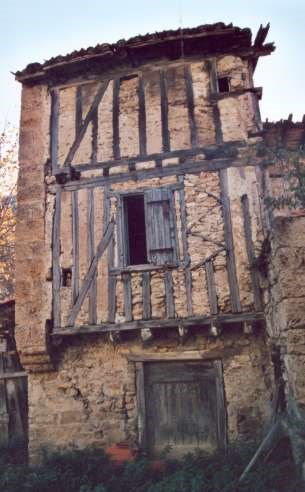
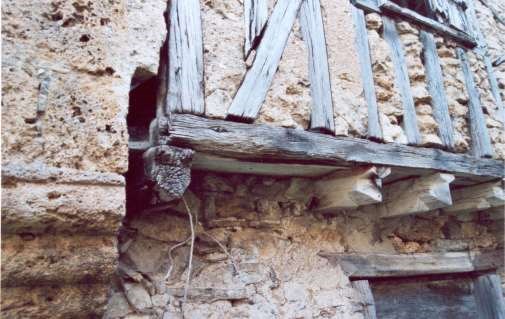
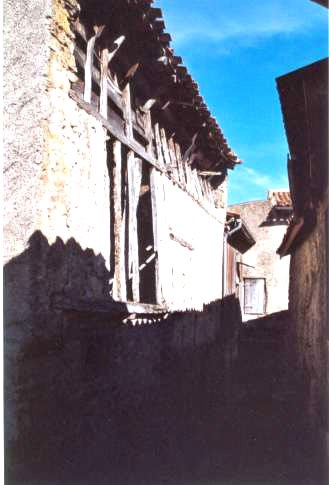
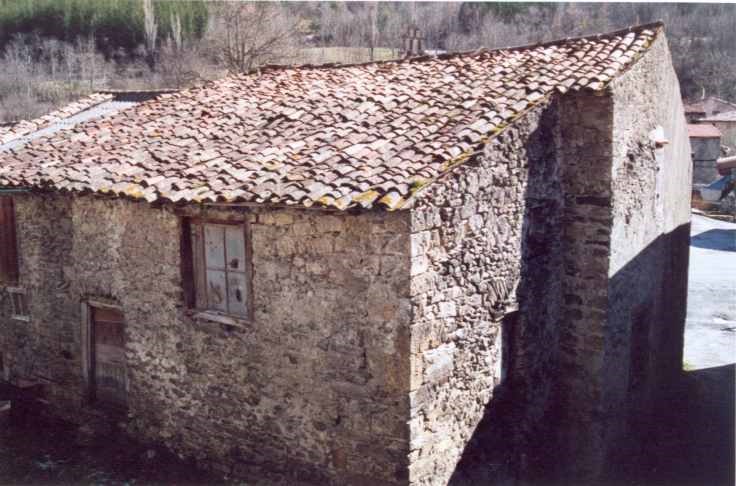
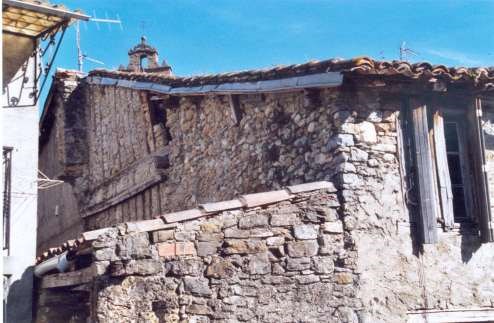
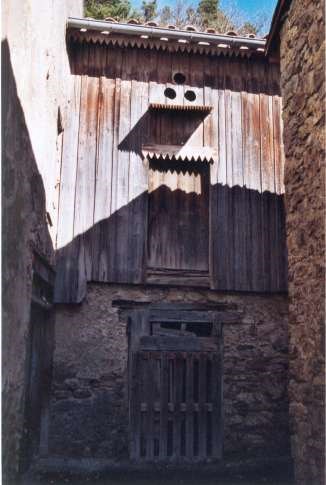
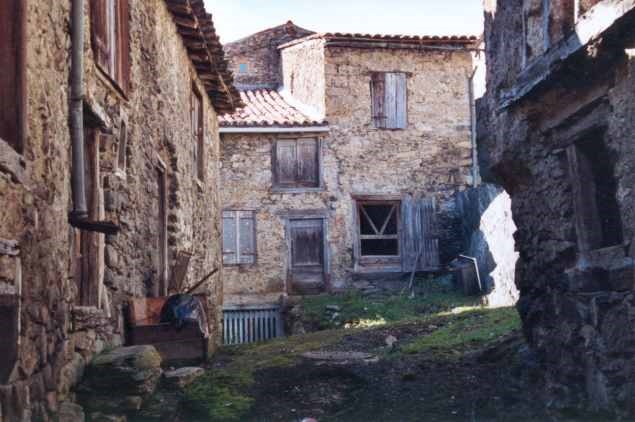
Old village houses
The Plagne Family
In 1539, the squire Sicard de Plaigne became Lord of Marsa and Quirbajou Baron de Caste1por.
By notarized act dated November 14, 1558, the consuls and inhabitants of Marsa and those of Quirbajou acting for themselves and for the inhabitants of Chalabrette and Castelpor renew their oath of loyalty to their lord.
As their privileges and faculties had never been stopped in writing and that they could be lost by "vice of the time" the parties passed to Marsa before Philippe Colaire notary in Béziers, an act recognizing these privileges and faculties. Among other things, the lord acknowledged to his vassals the faculty of opening and working on firm and uncultivated land with the defense of clearing and burning woodland without his license and against paying the agrier (droit seigneuria1 which consisted in taking part of the harvest on a domain granted to a tenant)
At the death of Sicard de Plagne, in March 1592, oath of fidelity was lent to his son Barthelemy who confirmed the privileges by notarial act passed in front of Arnaud de Campinas in the presence of the consuls of Marsa, Quirbajou and Jean Briant, Bailiff of the barony of Castelpor.
Which suggests that at that time Castelpor Castle was no longer able to defend the estate. In addition, numerous and precise provisions were made concerning the acorn. This transaction proves how much the population was engaged in raising livestock and mainly selling salted pork and hams.
The Pibrac Family
However, the family of Plagne died in turn. Anne de Plagne, little daughter of Barthelemy, had married Guy du Faur de Custos, Chevalier Comte de Pibrac, and the illustrious family of Toulouse. (to know more about Guy du Faur)
Under these new lords, disputes raised over the privileges conceded were emptied by a judgment of the Parliament of Toulouse (May 18, 1673).
A new agreement came into effect on April 20 of the following year. The new lord was to feed the required inhabitants with chores, unless he preferred to demand from them: "one penny a man's day, three sous a horse's head, and four for a pair of oxen or cows."
Other provisions concerned the law of blood which could only be claimed on the relationship of two witnesses; maintenance of the banal mill and authorizations for clearing.
The family of Pibrac remained in possession of this area until the Revolution. Gabrielle Anne of Pibrac Marsa having died without disposing of her possessions, her numerous heirs sold Marsa and Quirbajou to Xavier Rodillet, who even sold it to Casteilla.
With the decrees of 1789 decembers, the domain was shared. Marsa and Quirbajou took the status of commune with the present limits and became the owners of all the vacant wooded or unwooded lands which were to procure for them precious resources.
After long trials with the former owners, the two communes have continued to use wood for building in private forests, especially in Camelie.
Some sites to see about Guy de FAUR: Histoiry of Pibrac