







History of the church
Document from History in the Pays de Sault
The religious heritage
ACCESS Roquefeuil
For the writing of this article, we have drawn heavily from: in the Municipal Archives of Marsa, 11 (AMM) and in the work of Robert PlRAULT and Claudine VAILLANT "The Valley of Rébenty" 1995.
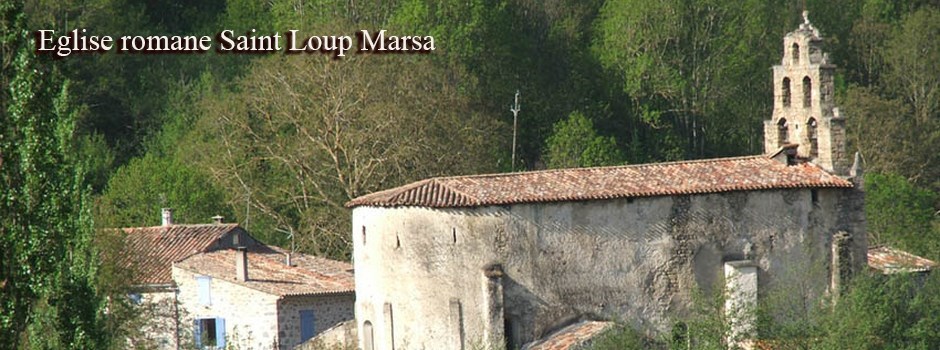
The photos that illustrate this text, show the current state of degradation of this building which requires a restoration became urgent.
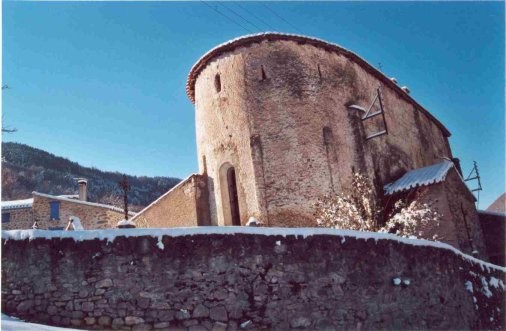
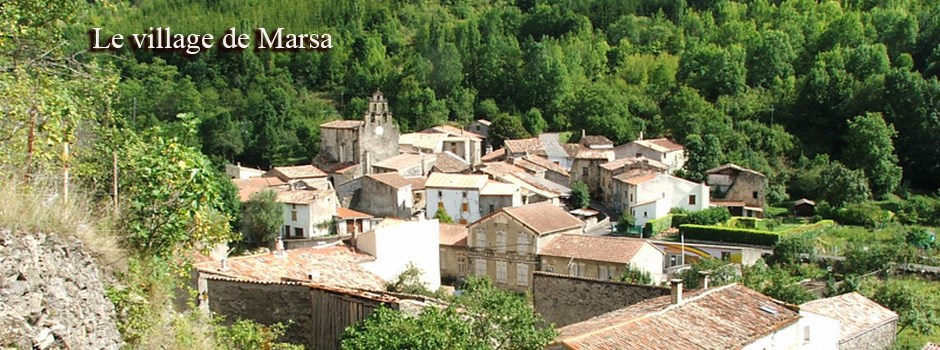
L'église de Marsa, sur la rive droite du Rébenty, domine les proches maisons du village, mais ce que le passant voit d'abord, en descendant la vallée, c'est la silhouette, élégante et fière, du clocher, Son histoire millénaire est étroitement liée à l'histoire du Languedoc. Son clocher-mur, à l'allure vaguement espagnole, ne fut pourtant ajouté que tardivement (XVIIIe siècle)à la vénérable église paroissiale dédiée à Saint- Loup. Cet évêque, natif de Toul (383 - 478) aurait sauvé Troyes des fureurs d'Attila en 451, ce qui, au demeurant, n'aurait rien d'extraordinaire, les évêques pouvant être, à cette époque, de bons administrateurs et même de redoutables chefs de guerre. Un tel patronage rassura peut-être la population locale dont l'église, probablement du XI eme siècle, fut très tôt citée dans les textes (1208, 1338, 1347) comme dépendance de l'abbaye voisine de Joucou.
Le clocher
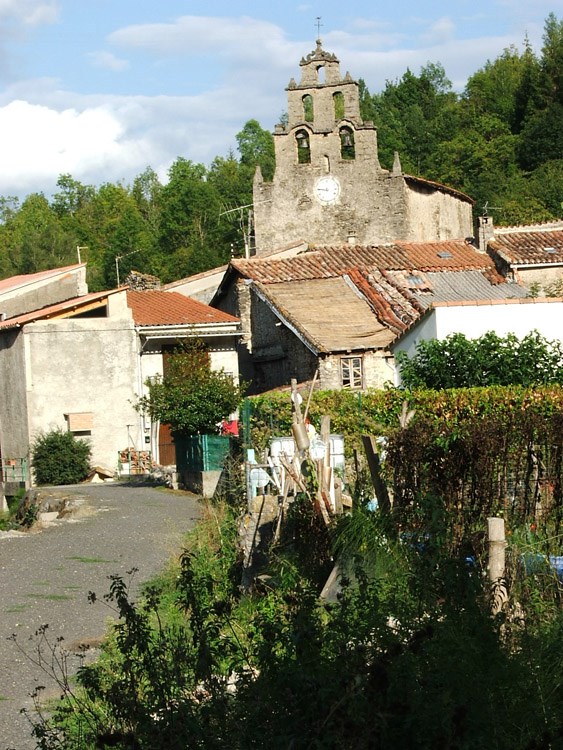
The church of Marsa, on the right bank of the Rebenty, dominates the near houses of the village, but what the passer-by sees first, while going down the valley, is the silhouette, elegant and proud, of the steeple, Its history millennium is closely linked to the history of Languedoc. Its wall-tower, vaguely Spanish in appearance, was only added late (eighteenth century) to the venerable parish church dedicated to St. Loup. This bishop, native of Toul (383 - 478) would have saved Troyes from the fury of Attila in 451, which, moreover, would not be extraordinary, the bishops could be, at that time, good administrators and even formidable warlords. Such patronage may have reassured the local population whose church, probably of the eleventh century, was very early quoted in the texts (1208, 1338, 1347) as dependency of the abbey
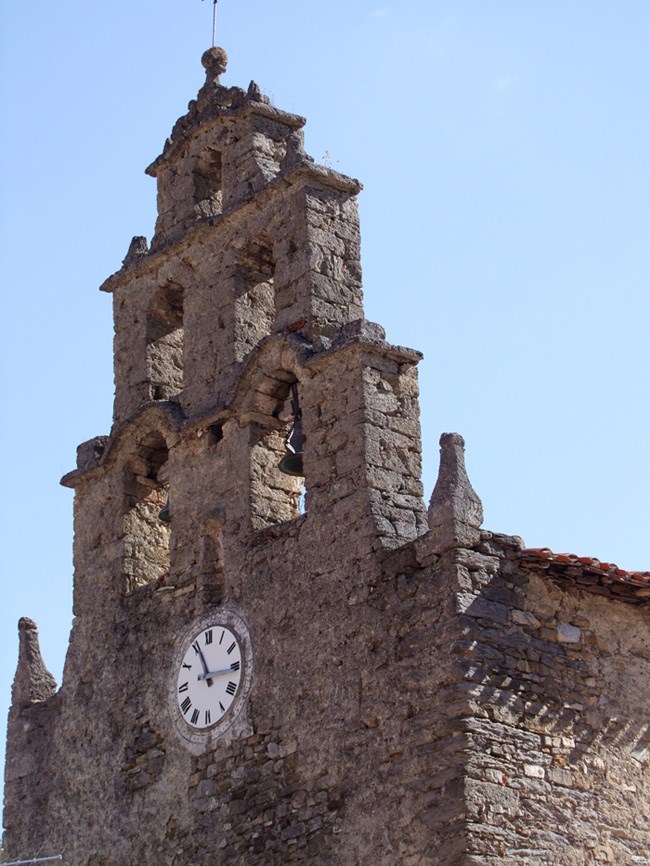
The largest, melted in 1717 (which would perhaps date the bell tower) has a diameter of 70 centimeters and a weight of 180 kilograms; it bears the inscription below:
"Under the invocation of Saint Loup of Siena, bishop, and in view of the gathering of the community, ring this bell with gratitude and respect to the Virgin Mary. The people and his priest praise God ".
The second, apparently dated 1781, is the smallest (57 centimeters in diameter) and therefore the lightest (100 kilograms). His inscription is as follows:
"For the true God, Voice of the people, summon the crowds, cry the dead, fight the fire, adorn the festivals. Saint Wolf, pray for us. ".
The nave
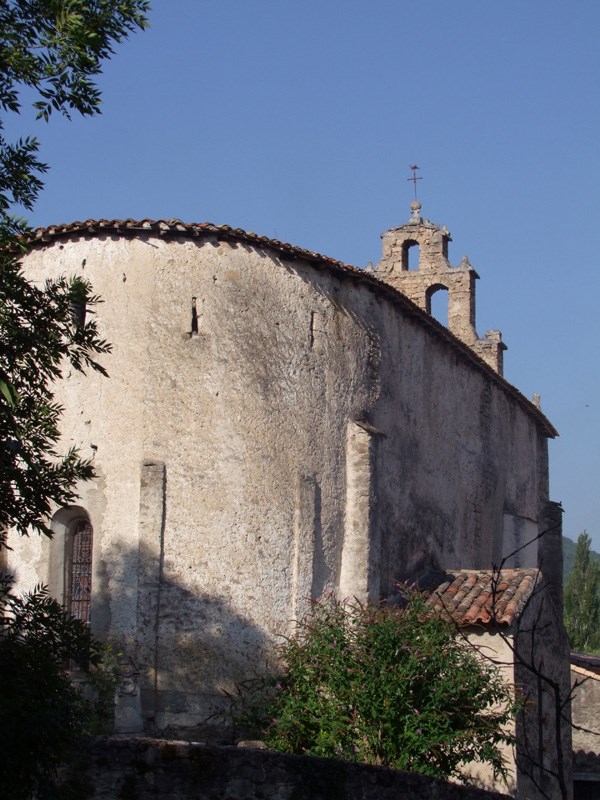
The ship, it surprises by its height. It was raised, probably in the thirteenth or fourteenth century, to strengthen it. Robert Pirault (op.cit.) Explains clearly how it was practiced:
... "Above the extrados (upper part of the vault) the roof was removed, the gutter walls were raised (with gutters or gutters) and a defense stage was built in overload and the church became a fortress.
Above the nave
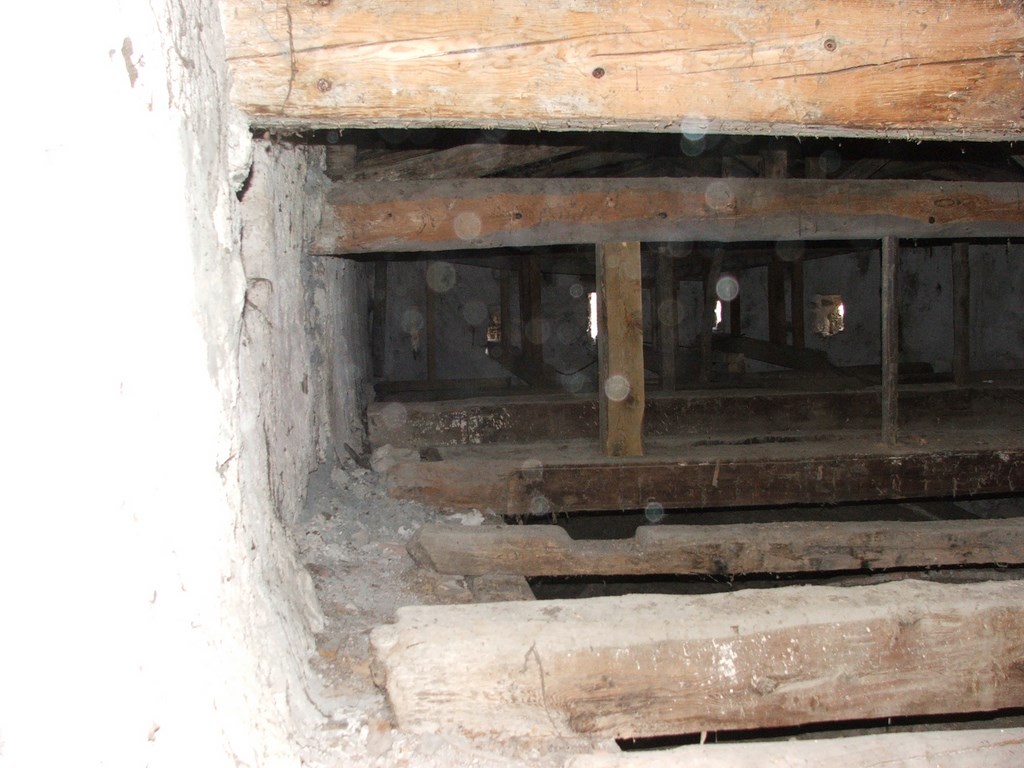
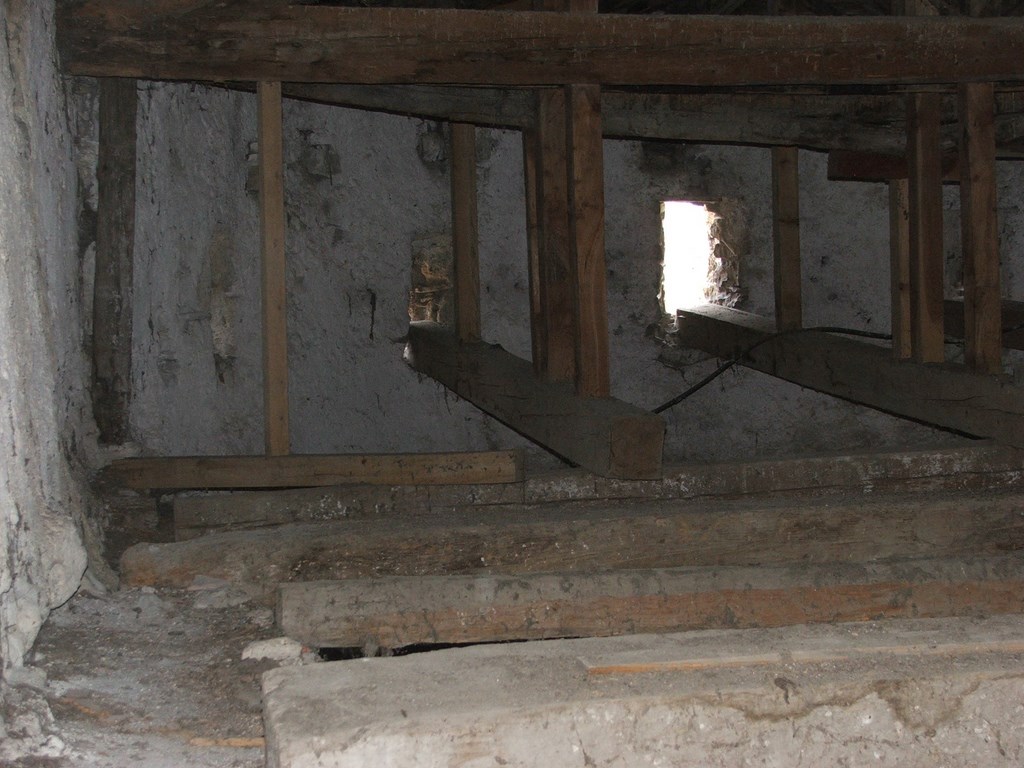
In the walls of this upper part, small defensive arches were established. (in the photo opposite, taken in the attic, we can see at the fonf, openings archer)
Often this floor communicated with the interior only.
Here, on the south coast, we had high doors that let in the sun. It had to be accessed by wooden stairs. One could resist a moment for an attack by retreating the outer ladders. But the risk of siege by the fire was great and it was enough to put fagots at the foot of the wall and light them! Marsa did not have to be attack because we do not see traces of fire ... ".
This raising of about four meters was established above the lesenes, clearly visible on the apse and which, originally, carried perhaps Lombard bands. During its original construction, the church had a single nave, naked and lower, therefore, than the present one. It was later, at times that it is sometimes difficult to specify, that were added: porch, chapels, baptismal font and sacristy.
For Robert Pirault:
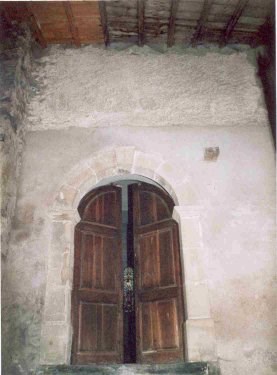
"It was probably in the eighteenth century that, to establish a counter-attack, a porch was built. In the south, at the same time, a new sacristy was added, but another already existed, probably added in the sixteenth century. On the two side walls, the nave (north-south) had to have an opening for a transept (or only to open side chapels): arcatures are indeed visible, north and south, and in Romanesque. A chapel was then added to the south, a boar's eye to the west. Farther buttresses to the north were needed to keep this church, too high now. All this is reminiscent of a primitive church of the twelfth century rounded and vaulted chevet, a nave probably vaulted and collapsed and having cast its walls outside. The west facade was redone for the bell tower and the last chapel was hung on it. It would require a more detailed external study, adds Robert Pirault, to affirm more ".
The renovation
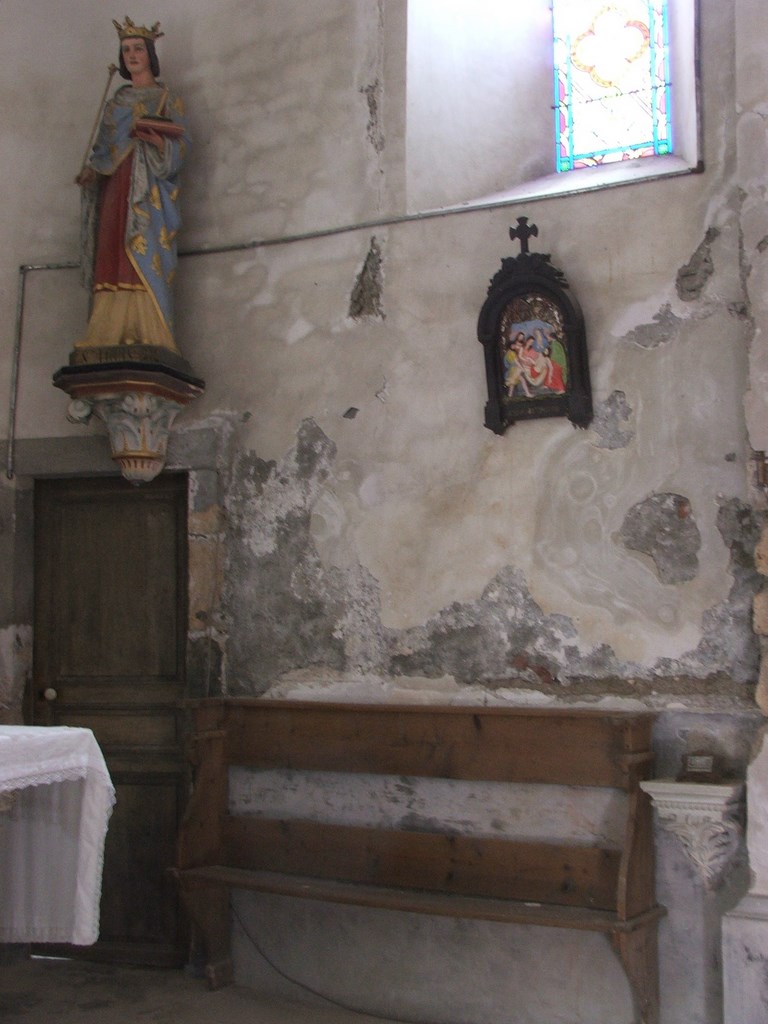
Work will be needed in the first half of the nineteenth century and a first estimate, amounting to 950 francs, will be established July 22, 1833. It concerned the roof (4 beams of 9 meters, 40 rafters, 200 tiles and 6 "charges" of "postam"), but also the ceiling, the two tribunes, the choir, the unfinished chapel (AMM). A justifying report, attached to the quote, states in particular that "The roof, which lacks a considerable amount of tiles, threatens a next collapse (sic) ... The plaphon (sic) wooden, made since time immemorial, It is almost entirely destroyed ... The chapel that the necessity has forced to build, the nave being insufficient to contain the population that the lack of funds of the commune has prevented to finish must be arranged properly to be able to say the mass there. It must be done, among other things, first an altar above which must be placed necessarily a statue of the Virgin. Or other. Deen (sic) and respect for religion require it "(AMM).
A statue of the Virgin is there today.
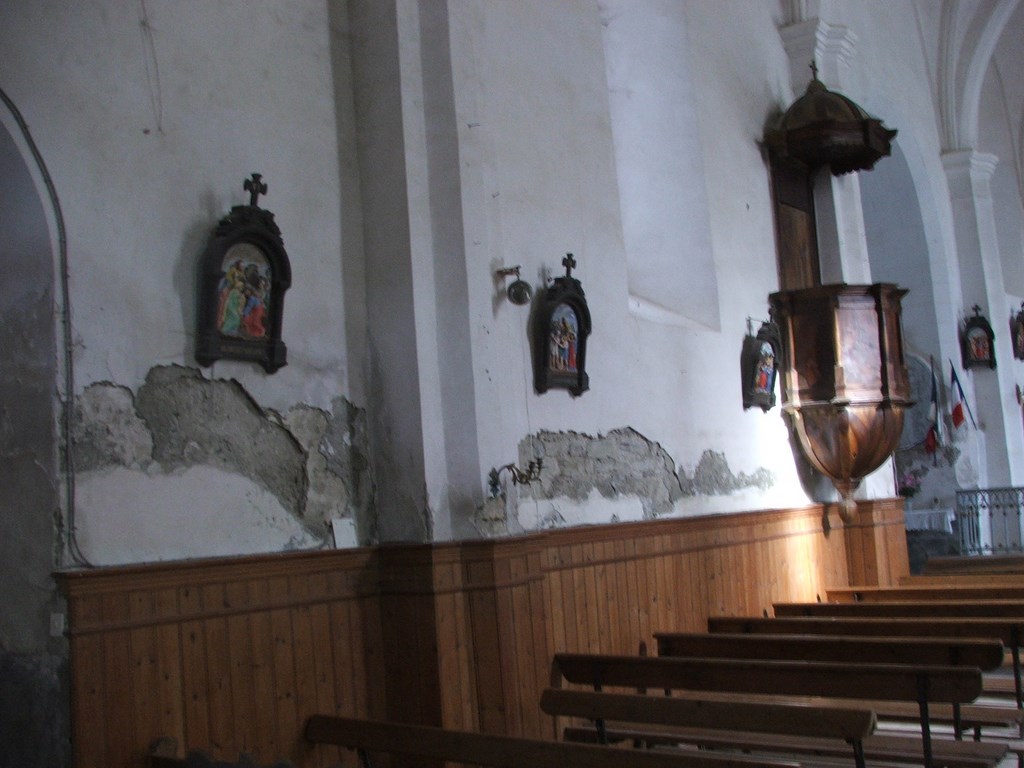
There is urgency and yet things drag on. A new estimate is drawn up, August 15, 1838, more than three times higher than the first: 3027 francs. On September 23, the communal assembly deliberates again on "urgent repairs to the church". There is still 739 francs which the Council is asking for "as a relief from the funds the French government gives to repair the churches dedicated to worship" (AMM). The financial question is all the more acute as the municipality must also invest in education, the Prefect having, by decision of 18 July 1841, authorized the acquisition of "the school house". Nevertheless, before this date, the adjudication of the works with the church was decided on October 22, 1840.
Other repairs, presumably of lesser importance, will be approved by the municipal authorities on May 21, 1857. There was then, and already in the eighteenth century, a wooden ceiling, which does not mean, of course, that vault did not exist before. 464 souls in 1826 and a maximum of 516 in 1851.
New works late nineteenth
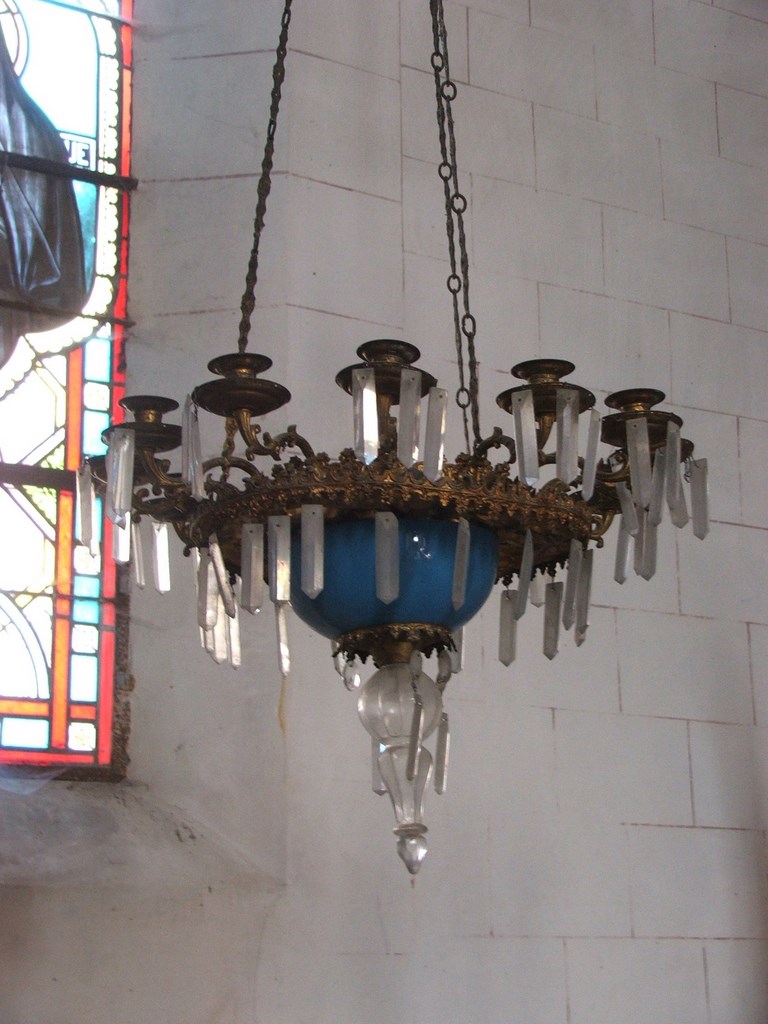
However, new works will be needed towards the end of the century and will again compete with the teaching expenses, the municipality deciding, on May 22, 1887, a loan of 29,000 francs for the construction of a school group, that one who is still standing today.
On February 20, 1888, the decision was made to build a sacristy. November 9, 1888, new repairs are undertaken for an amount of 4650 francs financed in the following way:
Subsidy from the State (acquired as of 21.12.1888): 1600 francs;
Participation of the commune: 1,500 francs;
Subscription: 1,000 francs;
Produced from an extraordinary cut of wood: 550 francs.
This time the work is carried out more quickly and on January 17, 1892 the Council, meeting in extraordinary session, takes note of the end of the repairs which the cost will finally reach 5050 francs.
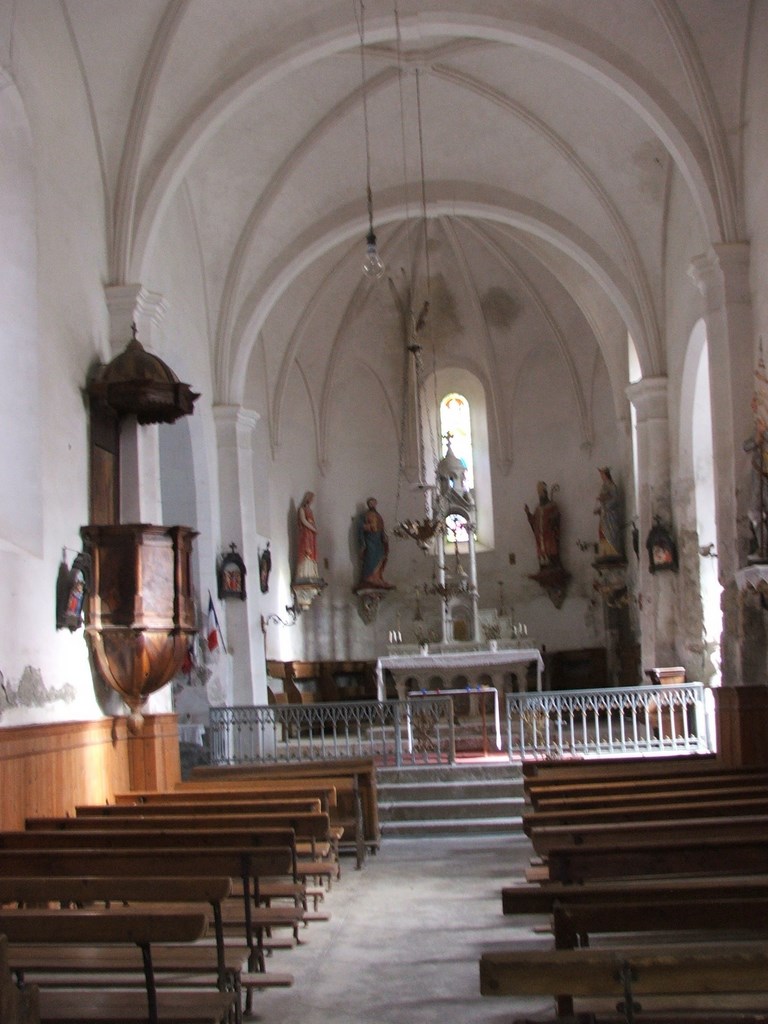
It was then that the vault was built, but also the sacristy. We pierced a new window and redid the floor covering.
After the church, it is in the cemetery that the elected officials are interested. The former, which surrounds the bedside, became too small for a population that still stood at 435 people in 1886. A first enlargement decision was made on March 13, 1892, followed by a decision of translation on March 2, 1892. March 1899. Here again we had taken the time for reflection: a municipal by-law was passed, closing the old cemetery and opening the new cemetery, which dates from November 19, 1903.
Shortly afterwards, on the 14th of April, 1907, the Council was brought, for the first time, to rent the presbytery at its service. The annual rent was fixed at 20 francs, on the proposal of the priest Tarbouriech, approved by the municipal authority.
Much more recently, a project to restore the church as a whole was planned in 1992 and partially completed by the renovation of the roof, which today should be fully reinforced. On this occasion a request for classification of the entire building, emanating from the municipality, was refused by the Regional Directorate of Cultural Action because of the heterogeneity of the construction.
The argument is of course valid, but the architectural diversity of the monument is also of interest.
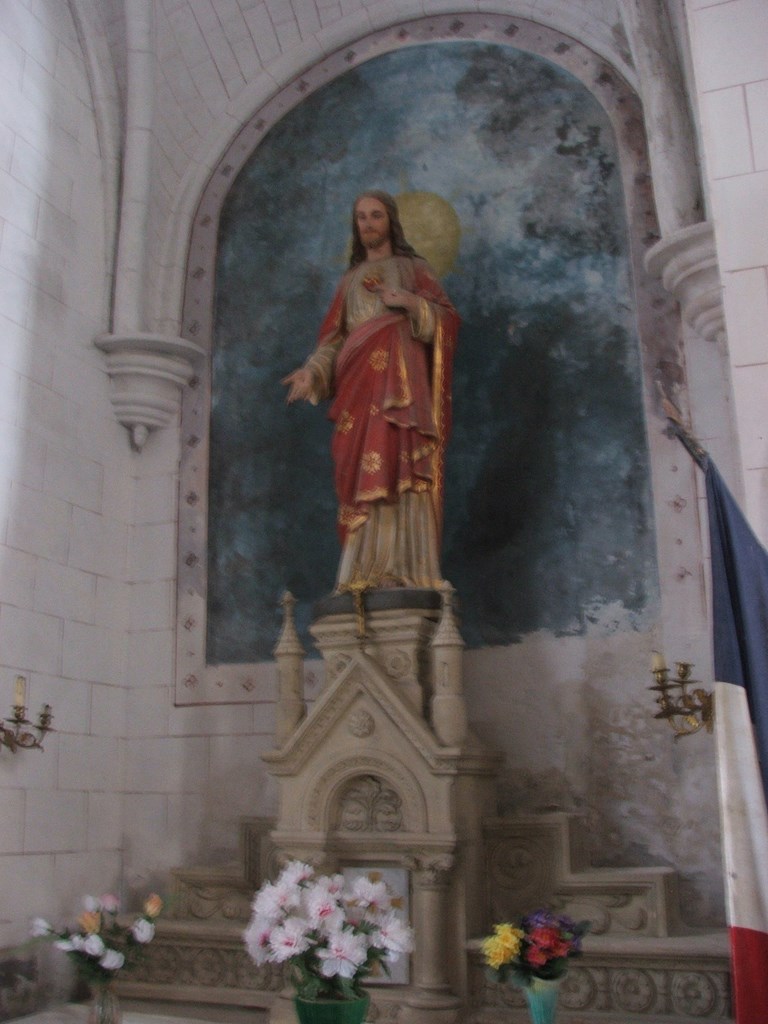
Today there is no resident priest in Marsa and serving him, rarely crosses the threshold of the church: it is not forbidden to visit it.
We enter through a side door, pierced north and preceded by a porch with little architectural interest. From the entrance, the first impression is that the vault is much lower than the external appearance of the walls would let believe: we can also verify it by unvisite the attic of the nave in which the frame occupies a height of several meters between the extrados and the roof.
Opposite the entrance opens the chapel of the Virgin, with its statues of Mary and Bernadette, its stained glass window of Joan of Arc and baptismal font. The bottom of the church is occupied by a platform with horizontal railing wrought iron.
The vault of the nave is supported by arches of Romanesque bill, separated by edges intersecting warheads.
On the right and left stained-glass windows with stylized geometric and vegetal motifs illuminate the nave on the left by the pulpit, which is accessed by a staircase pierced in the thickness of the wall, on the right by statues of Joan of Arc and Saint Anthony of Padua.
Stained glass windows
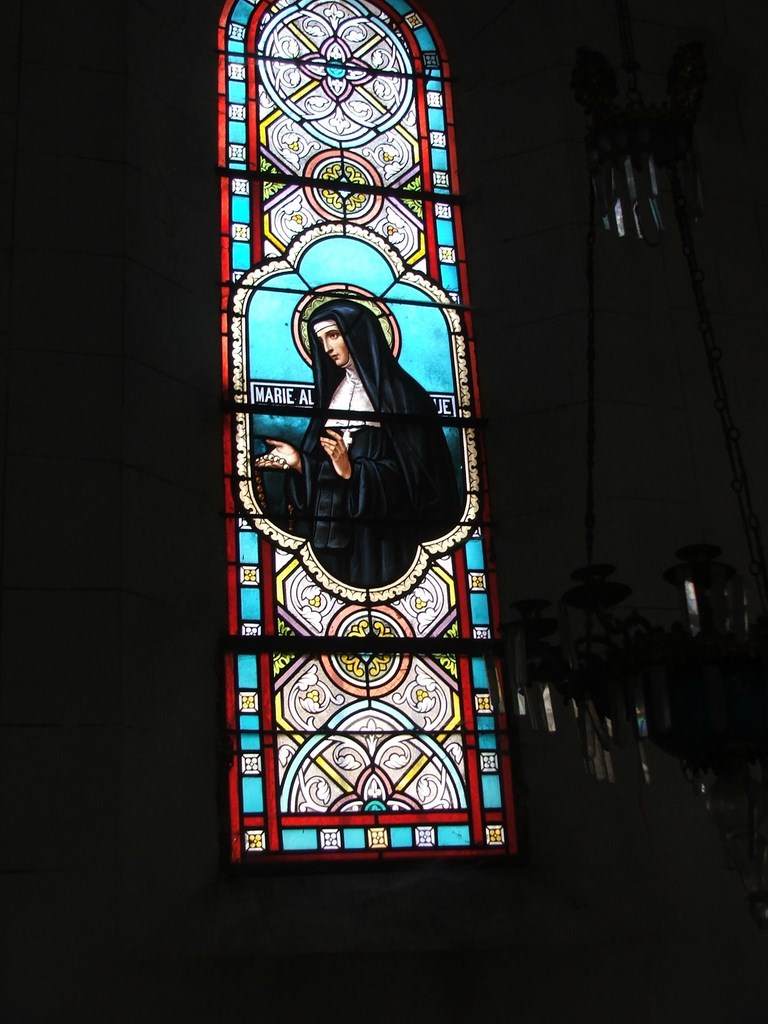
Two side chapels immediately precede the choir. The one on the left is dedicated to the Sacred Heart of Jesus and has a stained glass window depicting a nun: Marie AI ... UE (Marie Angélique?), The one on the right is dedicated to Saint-Joseph whose statue bears the Child Jesus. communion table, painted wrought iron, opens on the choir whose altar supports a cross protected by a plaster baldaquin.The sacred space is decorated with two stained glass windows with geometric and plant motifs stylized, similar to each other, but different from those of the nave, and four statues representing, from left to right: Saint Laurence (a saint rarely statufiée, the Apostle Peter, Saint-Loup (with his bishop's crozier) and Saint-Louis (King Louis IX). The whole deserves an interior rehabilitation.We bet that it will hold the attention of the ediles, cornered, generation after generation, to a work of Sisyphus.
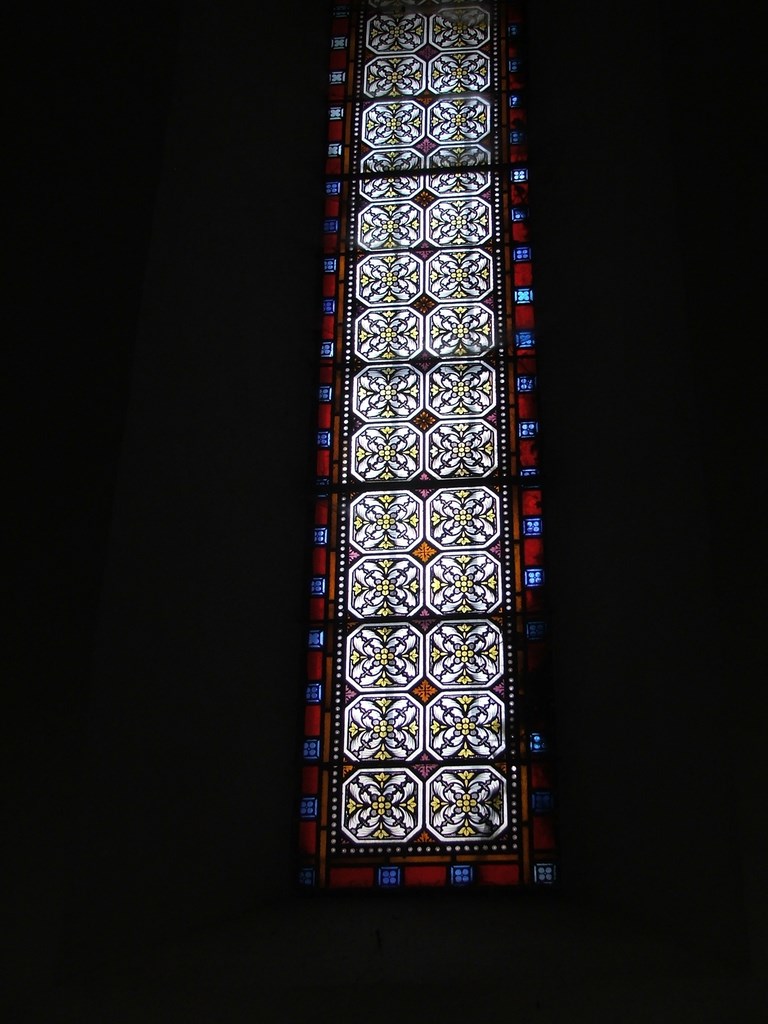
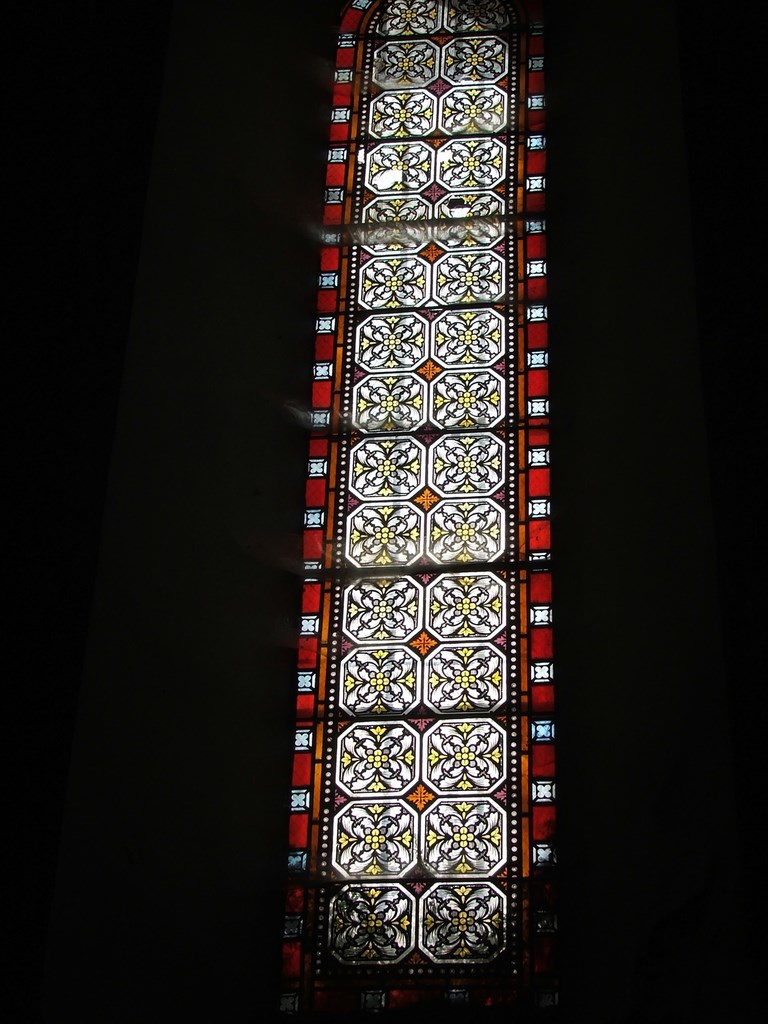
Stained glass window of the bell tower
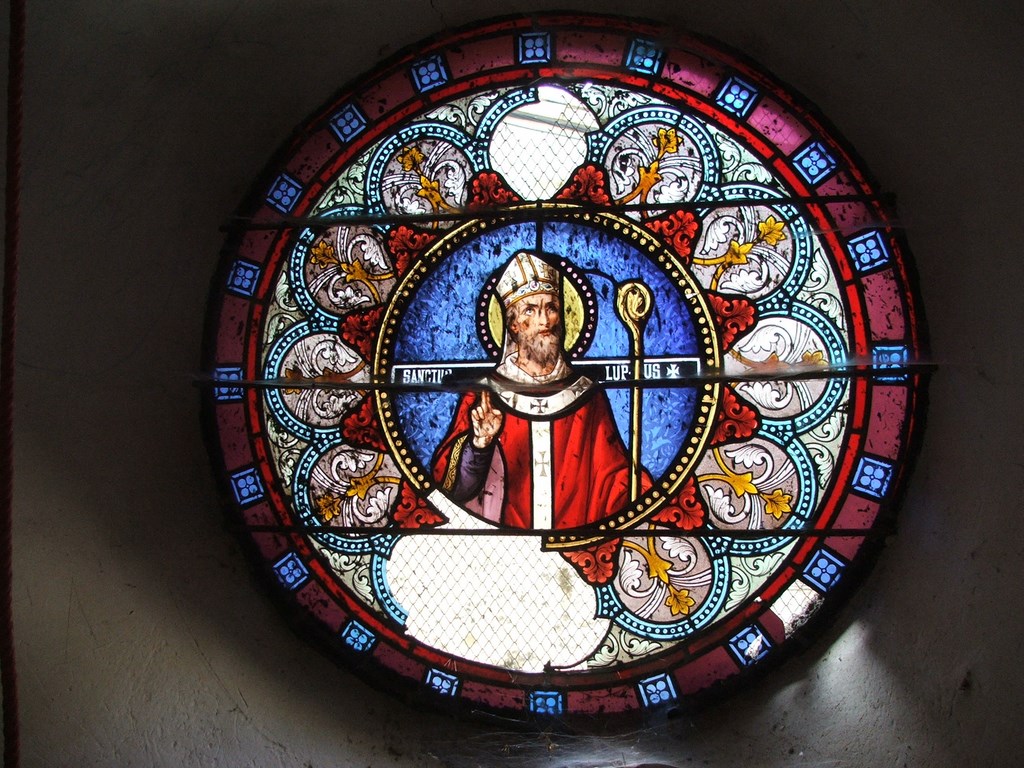
Saint Lupus stained glass window (St Loup) located in the bell tower. On the left as it should be (digital restoration by M. Espinasse Pascal), right current status
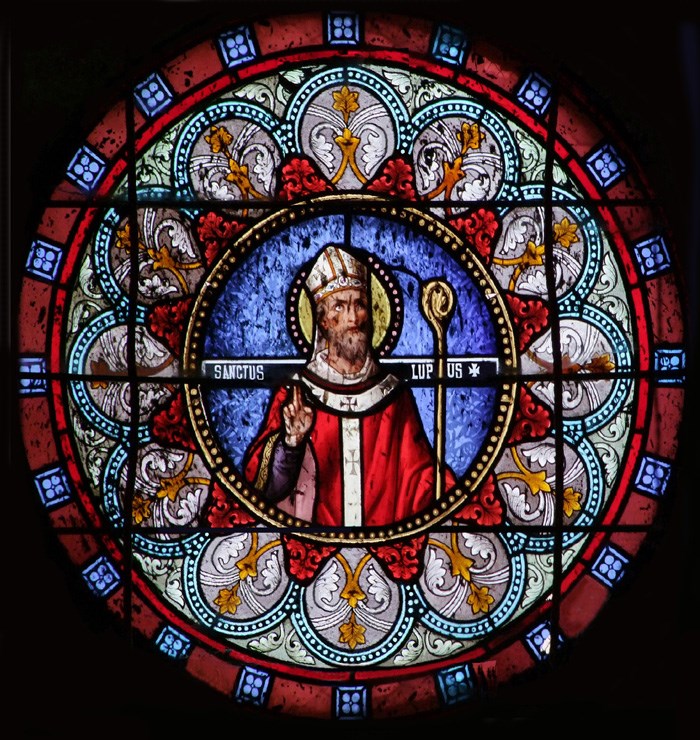
As it might be once renovated ....
Law of Separation of Churches and State
The law of separation of the churches and the State of 1905 profoundly changed the relations between the municipality on the one hand, the clergy and the Council of Fabrique on the other hand. In Marsa this resulted in particular in two decisions:
The first, of April 10, 1907, regulated the ringing of bells.
This is a careful and balanced text requiring close collaboration between the parties; However, in article 10, there is a prohibition against a popular belief and practice widely practiced in the Pays de Sault: the ringing of bells to ward off the devastating effects of the storm and fire. hail.
The second, April 14, 1907 was to rent for the first time the presbytery to his serving. The annual rent was fixed at 20 francs, on the proposal of the priest Tarbouriech and approved by the municipal authority.
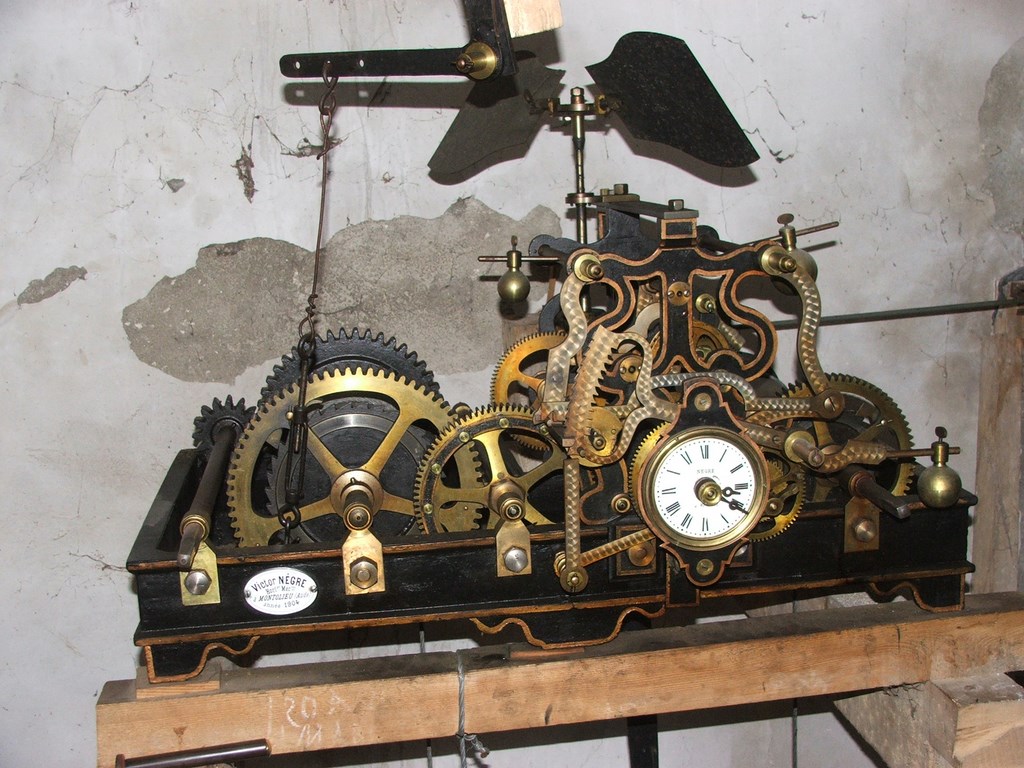
In the photo the clock mechanism of the church dating from the early twentieth century
MUNICIPAL DECREE regulating bell ringtones
We, Mayor of the municipality of Marsa
Considering the law of April 5, 1884) articles 91, 92, 93, 94, 95, 96 and 97; Given the law of 9 December 1905) Article 27; Having regard to the Decree of 16 March 1906) Articles 50-51 and 52;
HEREBY ORDER:
The bells are set as follows:
TITLE I Religious Rings
Art. 1 - The pastor or the pastor has the sole right to ring the bells of the Church for the offices, public prayers and other religious exercises.
Art.2 - These offices, prayers and exercises can be announced only once, each by a ringing which will not exceed five minutes for ordinary ceremonies, and twenty minutes for solemn ceremonies.
Art.3 - Exceptionally the offices of Sundays and local festivals may be announced on two or three occasions of twenty minutes each.
Art.4 - In times of epidemic, ringtones for ceremonies and funeral services may be suspended by a municipal officer.
Art.5 - Ringtones can not take place, for any reason whatsoever, before five o'clock in the morning and after nine o'clock in the evening from April 1 to September 30 and before six o'clock in the morning and after eight o'clock in the evening, from "October to March 31, except however during Christmas night.
Art. 6 - In addition to the cases provided for above, the ringtones can not take place without the authorization of the Mayor or his delegate.
TITLE II Civil ringtones
Art. 7 - The Mayor or his delegate will have the right to ring the bells of the Church:
1 °) When it will be necessary to reunite the inhabitants to prevent or stop some accident likely to require their assistance, as in cases of fire, flood, invasion of the enemy, riot, and in all other cases of common danger, requiring prompt assistance.
2 °) To announce the official passage of the President of the Republic;
3 °) The day before and the day of the National Day and local festivals;
Art. 8 - The civil ringtones ordered by the Mayor or his delegate shall be executed by the ruler of the Church, who shall receive on this account an indemnity fixed by the Municipal Council. In case of refusal of this bell ringer, and even in all circumstances if he deems it preferable, the Mayor may appoint to execute the civil ringtones, a ringer
which will be exclusively subject to these orders.
Art.9 - For this purpose, the bell ringer will receive the key of the bell tower or that of the church) if the entrance to the bell tower is not independent. This key can be used only for this purpose or to go up the public clock or to have an architect make an assessment of the repairs to be made to the building.
Art.10 - The ringing of bells on the fly is forbidden during thunderstorms.
Art. 11 If, because of the state of the bell tower, the movement of the bells presents a real danger, the ringtones may be provisionally prohibited by municipal decree.
Article 12 - Infringements of this judgment shall be recorded and prosecuted in accordance with
to laws.
A Marsa April 10, 1907 The Mayor
S illegible illegible
The liter
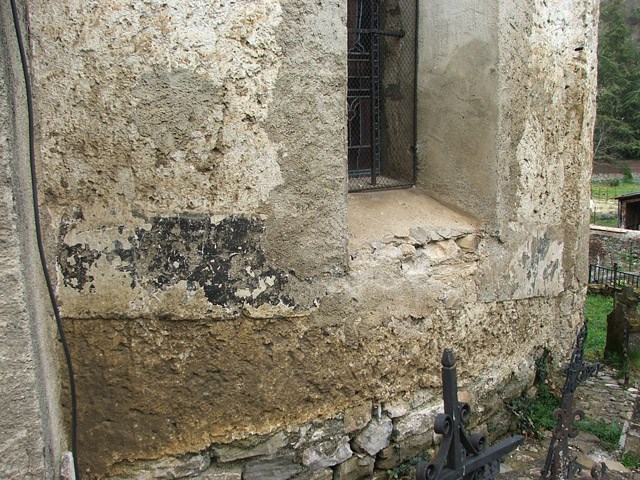
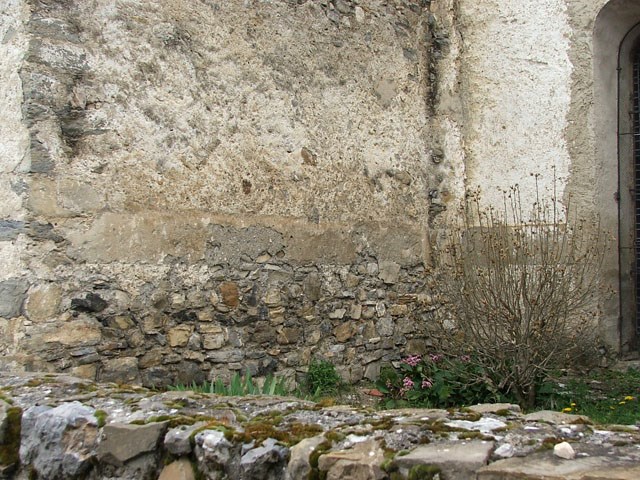
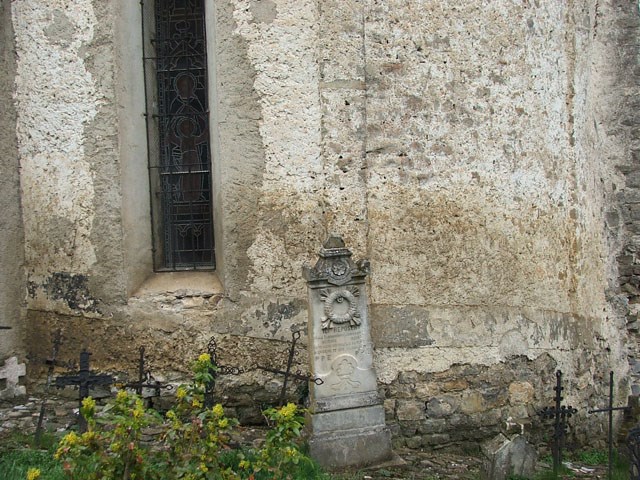


A "liter" or mourning band encircled the church. There are still traces of it in places.
A funeral liter or liter seigneuriale or liter funèbre, or belt was funeral, under the Old Regime, a black band placed inside and sometimes even outside a church to honor a deceased
This ornamentation of the church was performed on the occasion of the funeral of a personality. It consisted of a black band painted on the outer or inner walls of the church or religious building where the burial mass was being held. This black band placed high was a representation of the deceased and if any of his coat of arms.
The funeral liter could go around the whole building. Of a temporary nature, few liters have survived. The painting could be replaced by a temporary liter of cloth laid during the funeral of a privileged person. The liter could also be limited to the inner chapel of a church.
The French Revolution by the law of 13-20 April 1791, article 18, abolished this former seigniorial right.